Spunmelt Nonwoven Production Lines
Spunmelt Composite Lines
PROCESS & TECHNOLOGY
From PP Pellets
to Finished Fabric
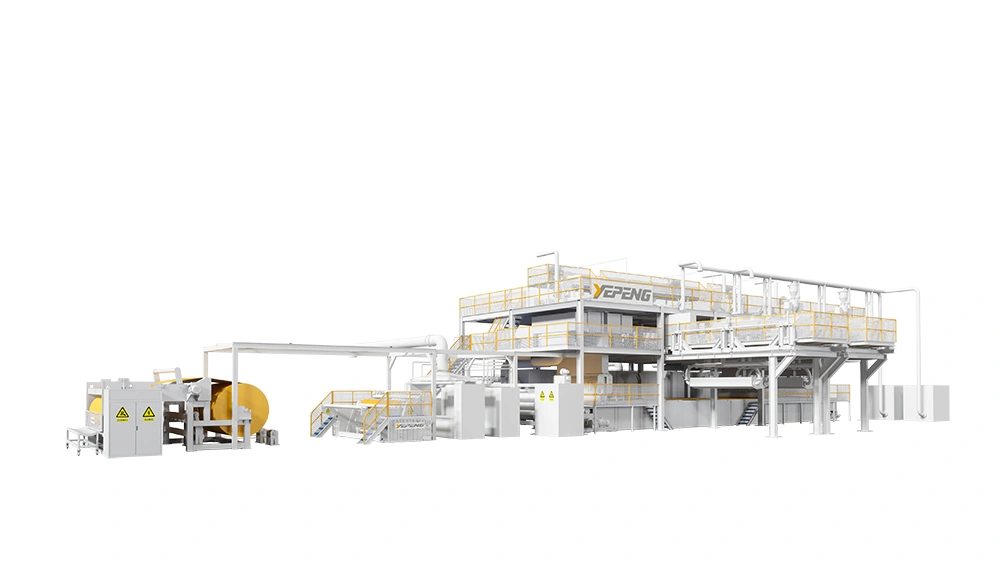
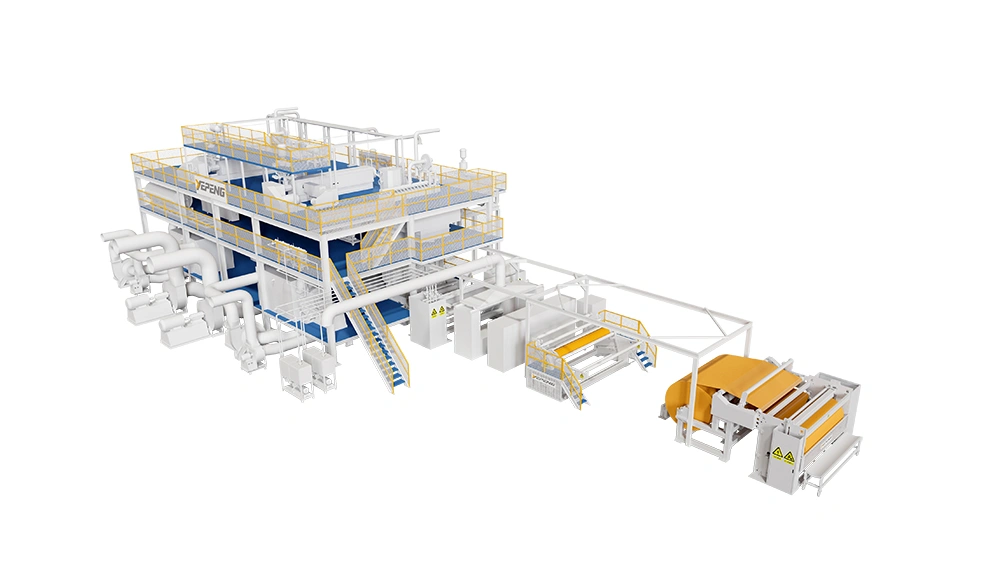
SMS, SSMS, SMMS and SSMMS composite nonwoven production lines.
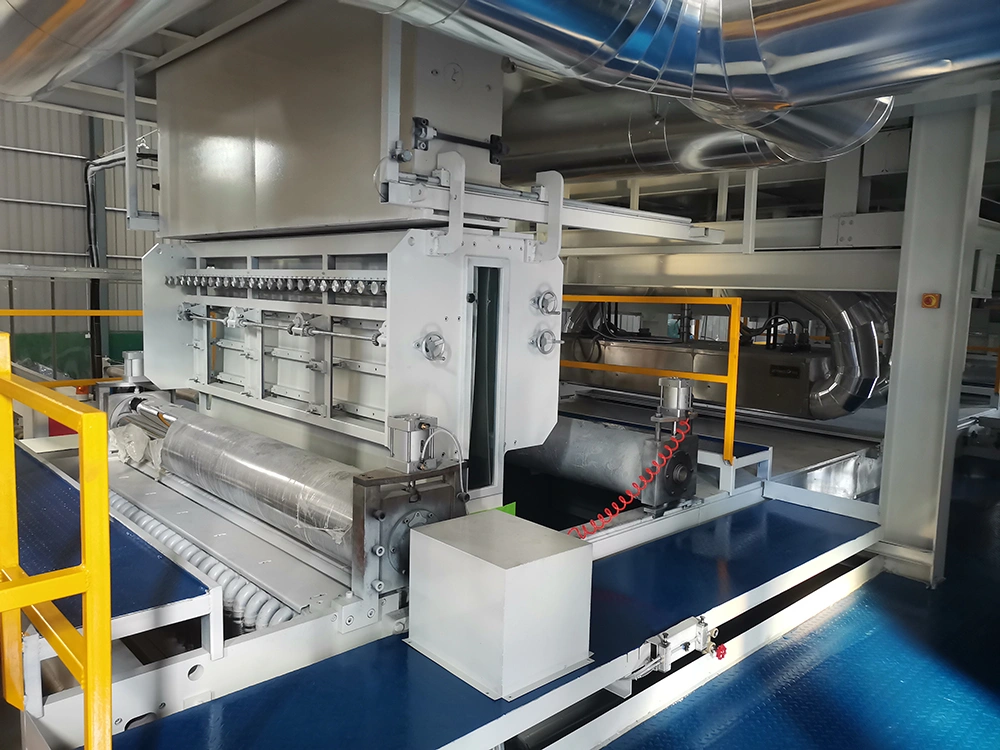
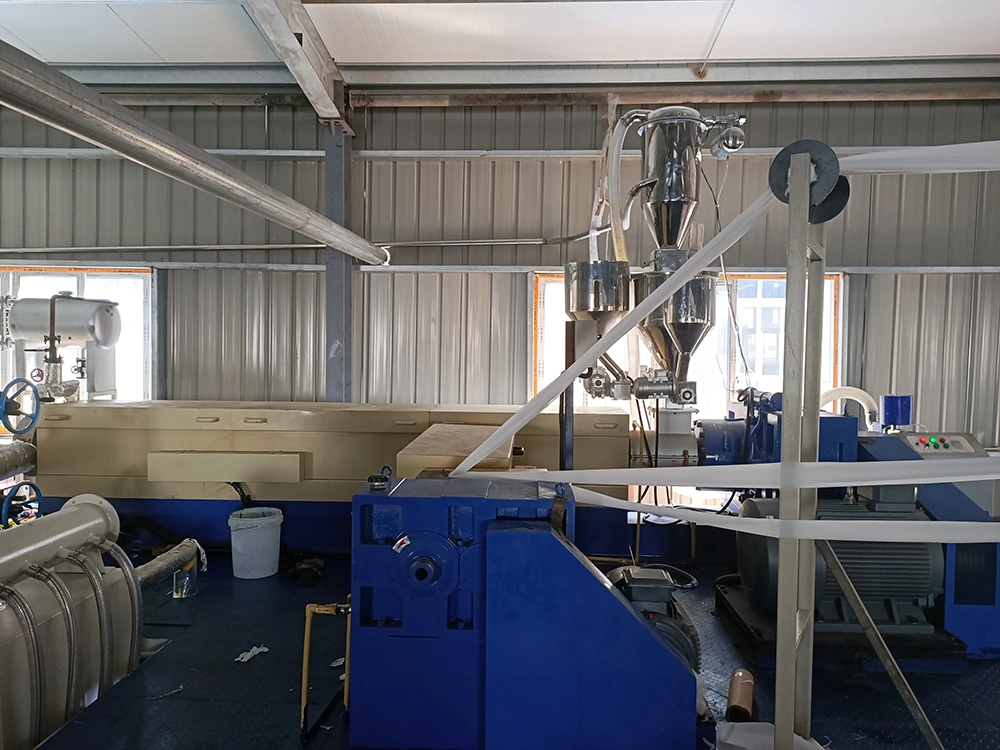
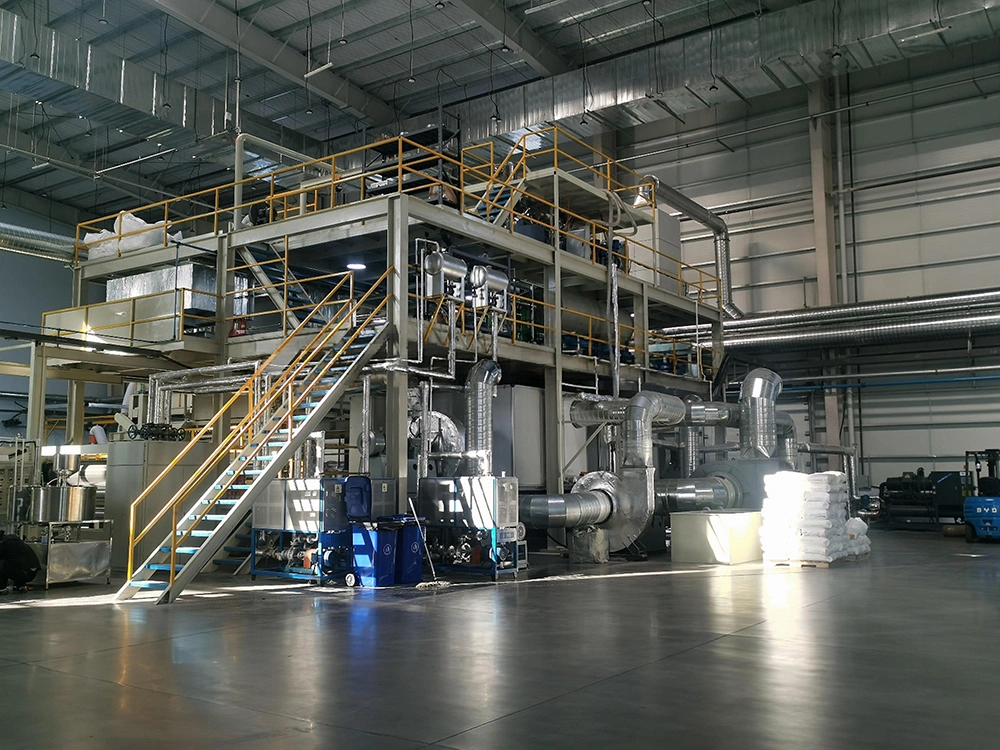
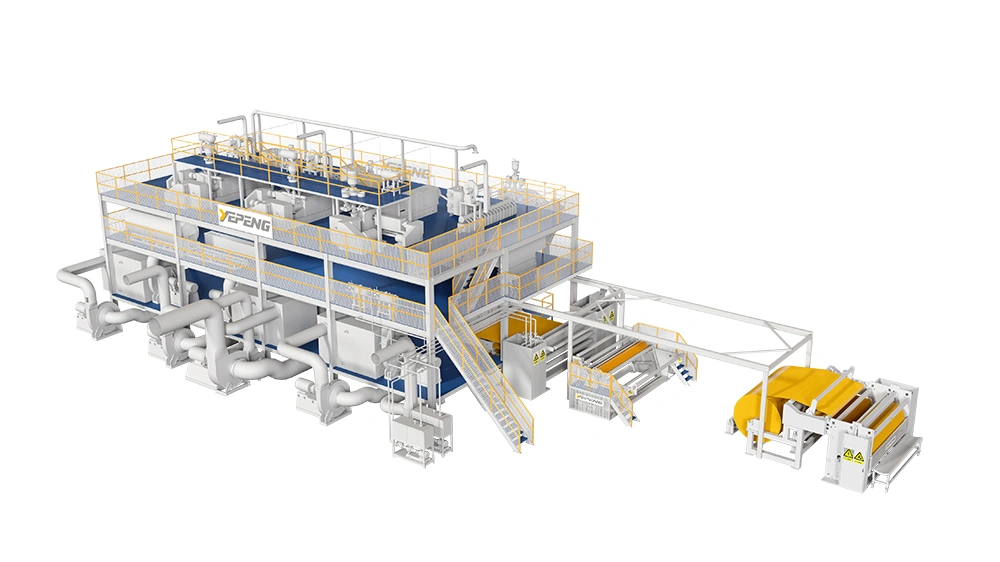
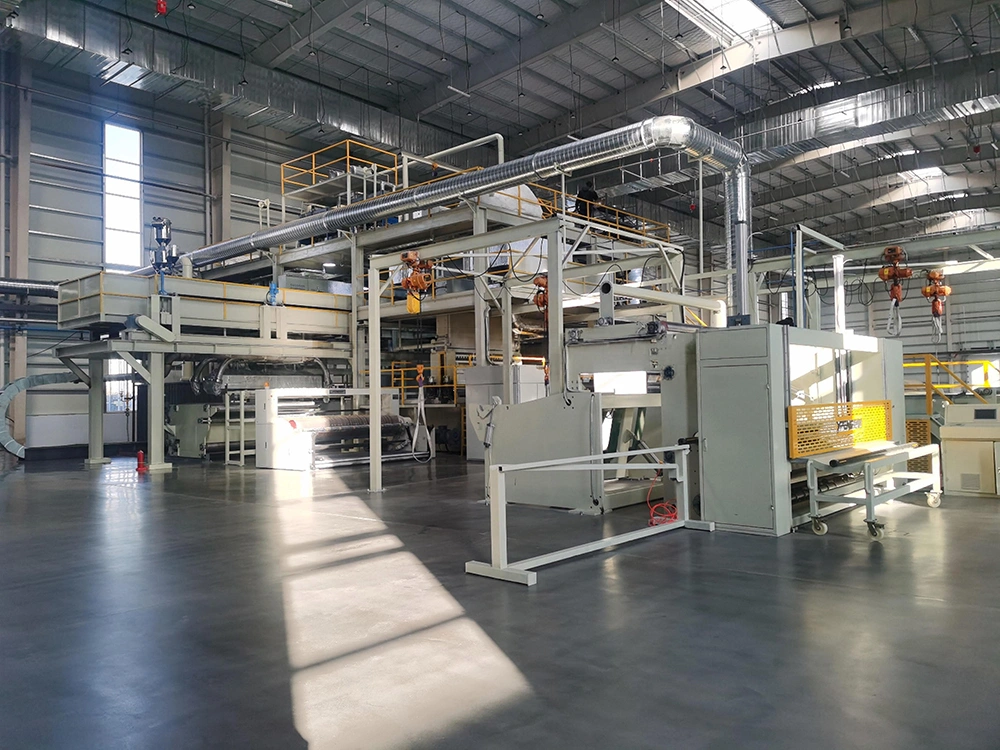
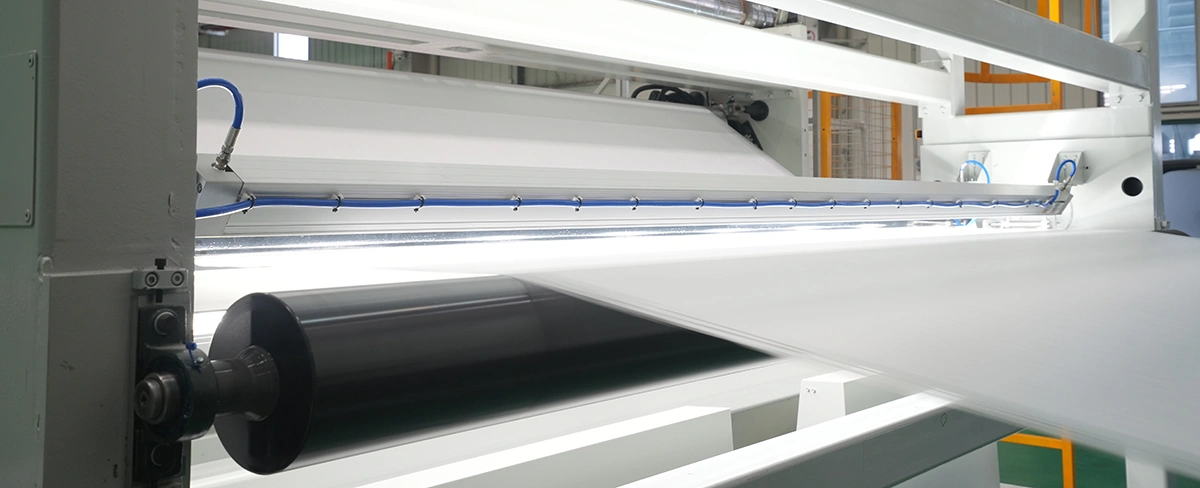
Spunmelt composite lines produce multilayer nonwoven fabric by combining spunbond and meltblown processes on the same line. To produce composite nonwoven material, polypropylene (PP), the main raw material, is first melted in the extruders and fed to the spinning sections. The spunbond section produces continuous filaments, while the meltblown section uses high-speed hot air to stretch the molten polymer into much finer fibers. The filaments and fine fibers form separate layers that are laid one over another before passing through the thermal bonding calender. Its heated rolls bond the layers into a single fabric with an SMS (spunbond + meltblown + spunbond) or SMMS (spunbond + meltblown + meltblown + spunbond) structure. The spunbond layers give the nonwoven fabric strength and durability, while the fine fibers in the meltblown layers help capture particles and limit the passage of liquids.
In order to reduce material waste and improve raw-material utilization, the strips cut from the fabric edges during inline slitting go directly to the edge trim recycling unit for grinding and melting. The recycling unit then sends the recovered material back into the main extrusion unit in controlled proportions while the nonwoven production process continues.
- AVAILABLE STRUCTURES
- SMS / SSMS / SMMS / SSMMS
Select a configuration to suit your output
and fabric application requirements. - FABRIC WIDTH
- 1600 / 2400 / 3200 mm
Fabric width options for SMS, SSMS,
SMMS and SSMMS configurations. - FABRIC BASIS WEIGHT
- 9–80 g/m²
YP-SMS: 9–80 g/m²
YP-SSMS / YP-SMMS / YP-SSMMS: 10–80 g/m²
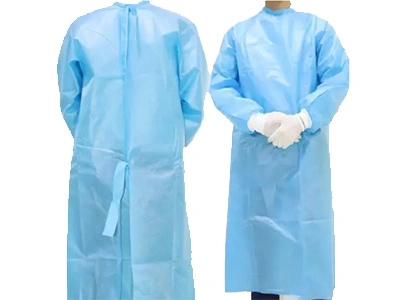
Medical Protection
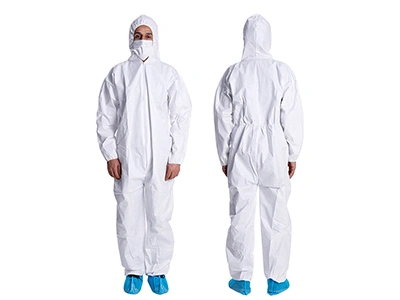
Surgical gowns, protective clothing, isolation gowns, and surgical drapes

Personal Hygiene
Diapers, sanitary pads, and absorbent underpads
Industrial Protection
Protective clothing, cleanroom garments, and dust-protective clothing
| Model | Unit | ||||
|---|---|---|---|---|---|
| Fabric basis weight | gsm | 9–80 | 10–80 | 10–80 | 10–80 |
| Fabric width | mm | 1600 / 2400 / 3200 | 1600 / 2400 / 3200 | 1600 / 2400 / 3200 | 1600 / 2400 / 3200 |
| Line speed | m/min | 450 | 650 | 450 | 650 |
| Annual production capacity (Based on 40 gsm fabric) | tons/year | 3330–7326 | 3396–9324 | 3330–7326 | 3400–10000 |
Note: The widths listed above are standard options. Other widths are available upon request.
- Strength and filtration
- The final nonwoven fabric is made up of strong spunbond layers as well as meltblown layers which aid in filtering particles.
- Multilayer barrier
- SMS fabric has a meltblown layer between two spunbond layers, which improves its ability to resist liquid penetration alongside its other performance characteristics.
- Durable outer layers
- Continuous filaments give the outer spunbond layers good tensile strength and help the fabric maintain its shape and dimensions during use.
- Dense filtration layer
- The middle meltblown layer contains tightly packed ultrafine fibers that help filter particles more efficiently and improve the nonwoven fabric’s protective performance.
- Adjustable fabric structure
- The spunbond and meltblown layers can be adjusted to give the nonwoven fabric the properties needed to be used in medical applications, protective clothing, and hygiene products.
- Protective fabric treatment
- The spunmelt nonwoven fabric is treated to resist alcohol and blood penetration, reduce static buildup, and repel water for medical protective applications.
- PP Feeding
- Melt Extrusion
- Melt Filtration
- Melt Metering
- Meltblown Spinning and Fiber Drawing
- Meltblown Web Formation
- Layering with Spunbond Webs
- Thermal Calender Bonding
- Inline Inspection
- Winding
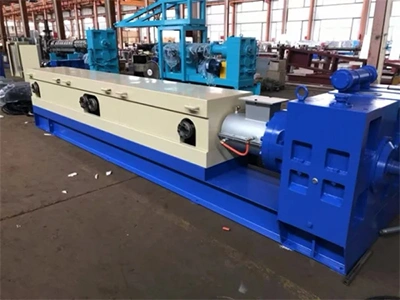
Extruder 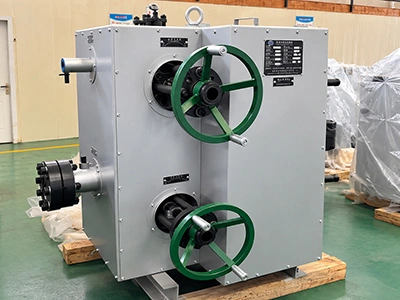
Melt Filter 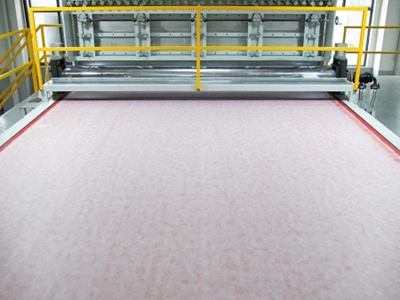
Web Forming Unit 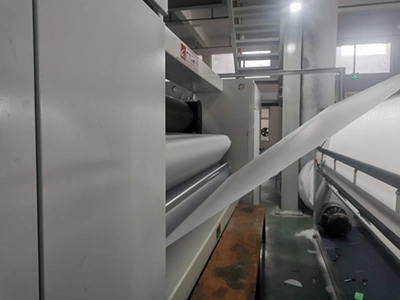
Thermal Bonding Calender 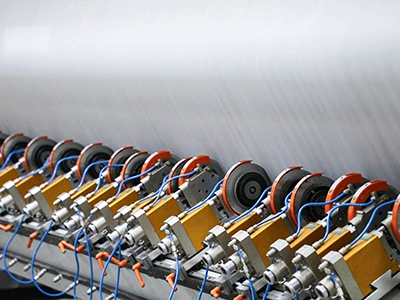
Slitter Rewinder