
- Crop Frost-Protection Covers
- Tree And Seedling Trunk-Wrapping Substrates
- Nonwoven Seedling-Raising Fabric
- Nonwoven Seedling Bags
Nonwoven Applications
Agriculture
Agricultural Nonwoven Production Solutions
Explore Recommended Lines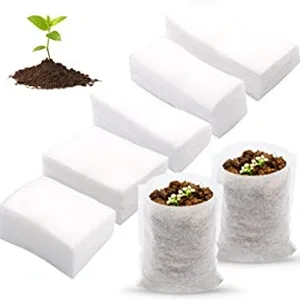
Nonwoven Requirements for Agricultural Applications
Nonwovens used in agriculture for crop covers, weed-control fabrics and seedling materials must provide a practical balance between air permeability, water permeability, weather resistance and mechanical strength. The structure of the fabric should allow air and moisture to pass through so that the crops can get the ventilation and water they need as they grow. Agricultural nonwovens must provide enough thermal protection and weather resistance to handle sunlight, rain, and changing temperatures. They need to be durable and strong enough to not tear during installation or break down over time in the field.
YP Nonwoven Solutions for Agricultural Materials
Our nonwoven production lines produce uniform nonwoven materials for agricultural applications using controlled spinning, filament drawing, web formation and thermal calender bonding. Process parameters can be adjusted around the required fabric structure, permeability, strength and basis weight of different agricultural products.
- Coordinated control of spinning pressure, filament drawing speed and airflow distribution in our nonwoven line produces more uniform fiber distribution across the web. The output is a more consistent fabric structure and surface quality with reduced cloudiness, basis-weight variation, uneven thickness and holes.
- Adjustments to filament fineness and web density can create an appropriate pore structure within the nonwoven. This balances mechanical strength with the air and water permeability required for crop covers, seedling materials and other agricultural applications.
- Control of the filament drawing ratio and thermal calender pressure strengthens the bonded nonwoven structure and improves tensile and tear resistance. Greater mechanical durability reduces the risk of damage as agricultural fabrics are laid out and during subsequent field use.
- An optional online inspection system can keep an eye on the quality of the fabric as it is being produced, detecting any variations in basis weight and flaws in the web so that operators can make timely adjustments to the process. This results in a more consistent fabric quality which in turn enables the reliable production of agricultural nonwovens for extended use.
Recommended Production Lines for Agricultural Applications
YP Nonwoven Machinery specializes in development and manufacturing of complete nonwoven production lines. Founded in 2008 as Wenzhou Yanpeng Nonwoven Technology Company, we have continued to expand our engineering and production capabilities with a long-standing focus on spunbond technology and integrated solutions for nonwoven manufacturing to support customers from equipment configuration through line installation and start-up.