YP-SS
Double-Beam Spunbond Fabric Line
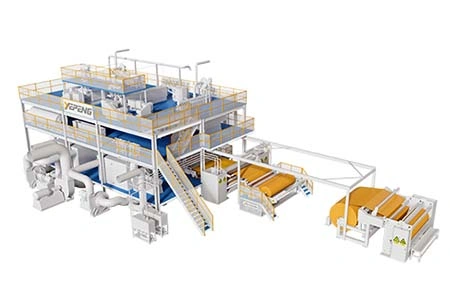
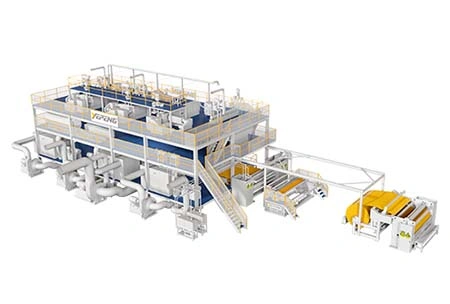
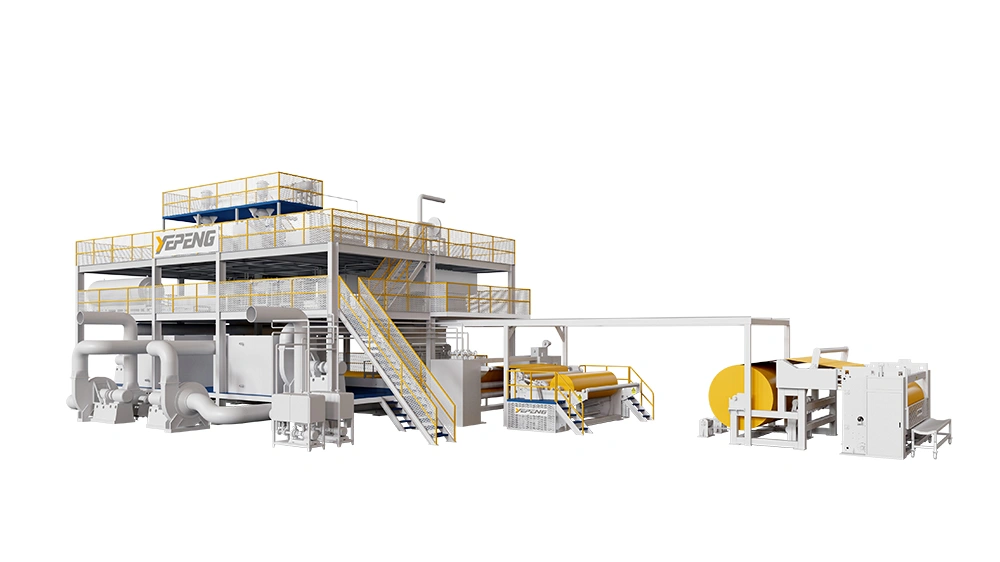
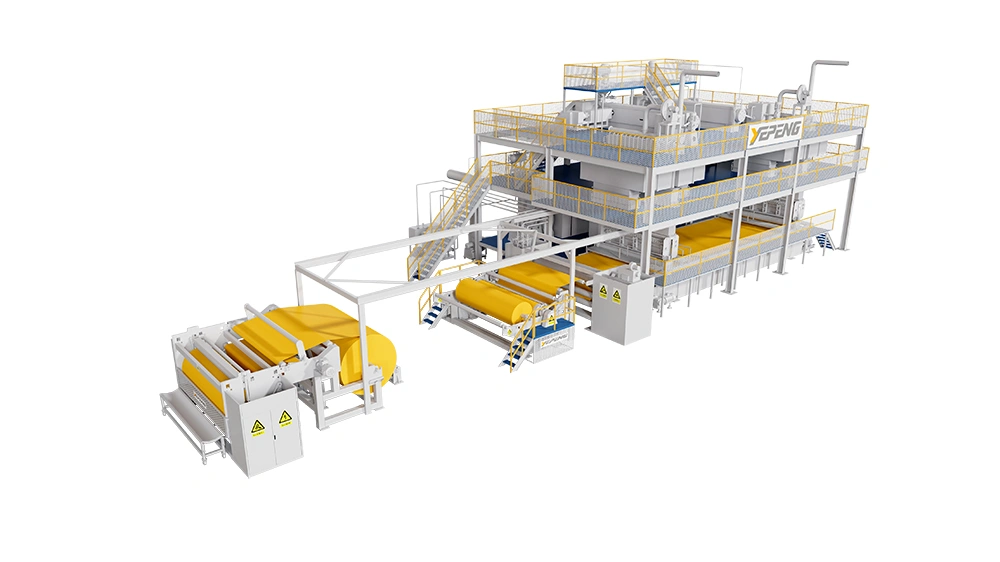
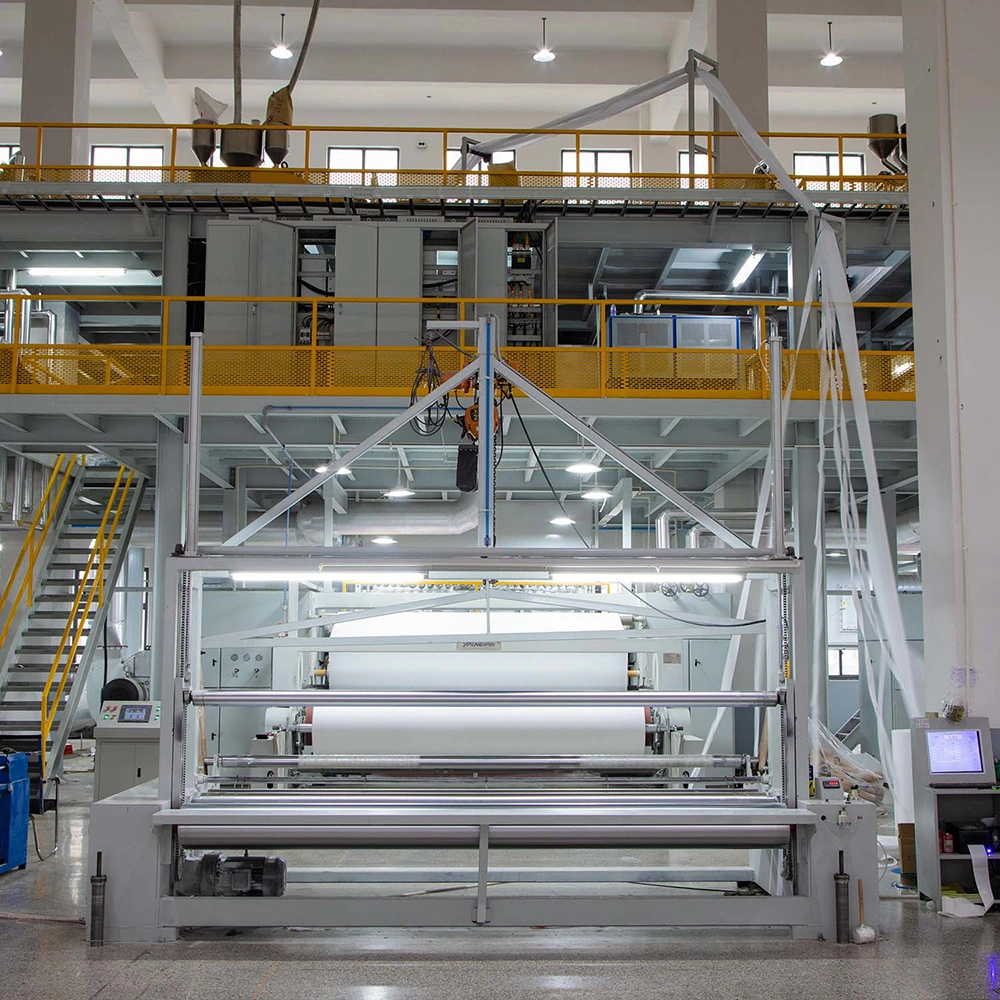
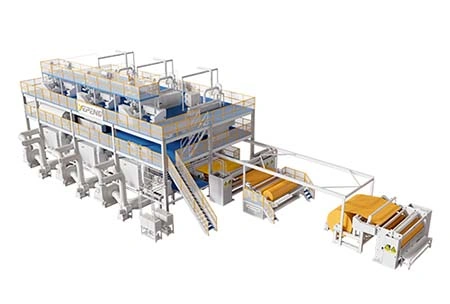
Double-beam spunbond lines produce SS nonwoven fabric from two layers of continuous filaments. The extruder melts the solid polymer raw material into a uniform melt, and both spinning beams form continuous filaments at the same time. After cooling and drawing with high-speed airflow, the filaments form two fiber webs that are laid one over the other. The thermal bonding calender then applies heat and pressure to melt and bond the fibers at the bonding points, joining the two webs into a single strong nonwoven fabric.
The two fiber webs overlap, so the second web helps cover small gaps or thin spots in the first. The resulting SS nonwoven fabric is more even and dense, with better tensile and tear strength. Double-beam lines produce more fabric than single-beam lines and are particularly suitable for low-weight fabric for T-shirt bags and flat bags. Additional hydrophilic treatment equipment enables the line to produce nonwoven fabric for certain hygiene applications.
- Operators Required
- 5
- Fabric Width
- 1600 / 2400 / 3200 mm
- Fabric Weight
- 9–120 g/m²
- Production Speed
- 400 m/min
Features
- Two spunbond systems lay one fiber web over the other to help cover thin or weak areas in a single web, producing more even, dense nonwoven fabric.
- Operators can adjust the spinnerets and filament drawing settings to produce SS nonwoven fabric with weights ranging from 9 to 120 g/m².
- Manufacturers can add functional masterbatches to the PP to give the nonwoven fabric properties such as water repellency, hydrophilicity, or antistatic performance.
- We customize the working width of the double-beam spunbond line according to the fabric clients want to produce, the space in their factory, and the plans for future production.
- SS spunbond production relies mainly on heat and airflow to form and bond the filaments, without generating process wastewater.
- PP scrap from nonwoven production can return to the production process for reuse, reducing material waste when manufacturing fabric for packaging and other applications.
Technical Specifications
| Model | |||
|---|---|---|---|
| Fabric Width | 1600 mm | 2400 mm | 3200 mm |
| Fabric Weight | 9–120 g/m² | 9–120 g/m² | 9–120 g/m² |
| Production Speed | 400 m/min | 400 m/min | 400 m/min |
| Annual Output (Based on 40 gsm fabric) |
2997–3330 t/year | 4329–4662 t/year | 5994–6327 t/year |
| Line Dimensions (L × W × H) |
32 × 13 × 11 m | 32 × 14 × 11 m | 32 × 15 × 11 m |
| Power Supply | 380 V / 50 Hz or customized | 380 V / 50 Hz or customized | 380 V / 50 Hz or customized |
| Operators Required | 5 | 5 | 5 |
Note: The widths listed above are standard options. Other widths are available upon request.
Applications
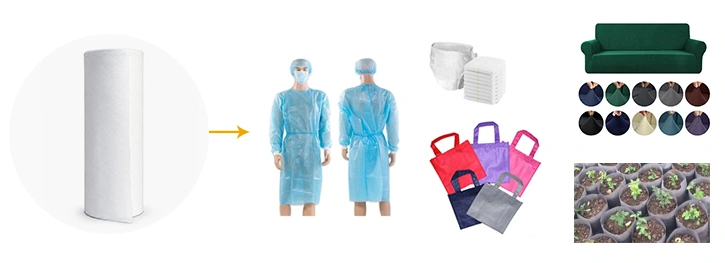
- Personal Hygiene
Baby diaper topsheets, nonwoven layers for backsheet lamination, core wraps, adult incontinence products, and sanitary pad materials
- Medical and Protective Supplies
Inner and outer mask layers, shoe covers, disposable caps, lightweight isolation gowns, and disposable protective items
- Packaging
Shopping bags, shoe bags, storage bags, and dust bags
- Agriculture
Crop covers, weed-control fabric, fruit protection bags, and seedling covers
- Furniture and Home Textiles
Mattress bottom fabric, sofa bottom fabric, pillow filling covers, and furniture dust covers
Production ProcessDownload Process Flow
- Raw Material Suction
- Extruder
- Extruder-Die
- Filter
- Metering Pump
- Spinning Die
- Spinneret Assembly
- Monomer Suction
- Quenching and drawing system
- Stretching
- Diffuser
- Web Former
- Conveyor Belt
- Calender
- Winder
- Slitter
Main Components
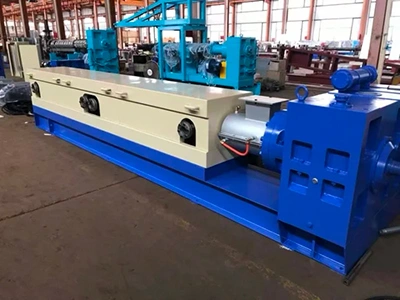
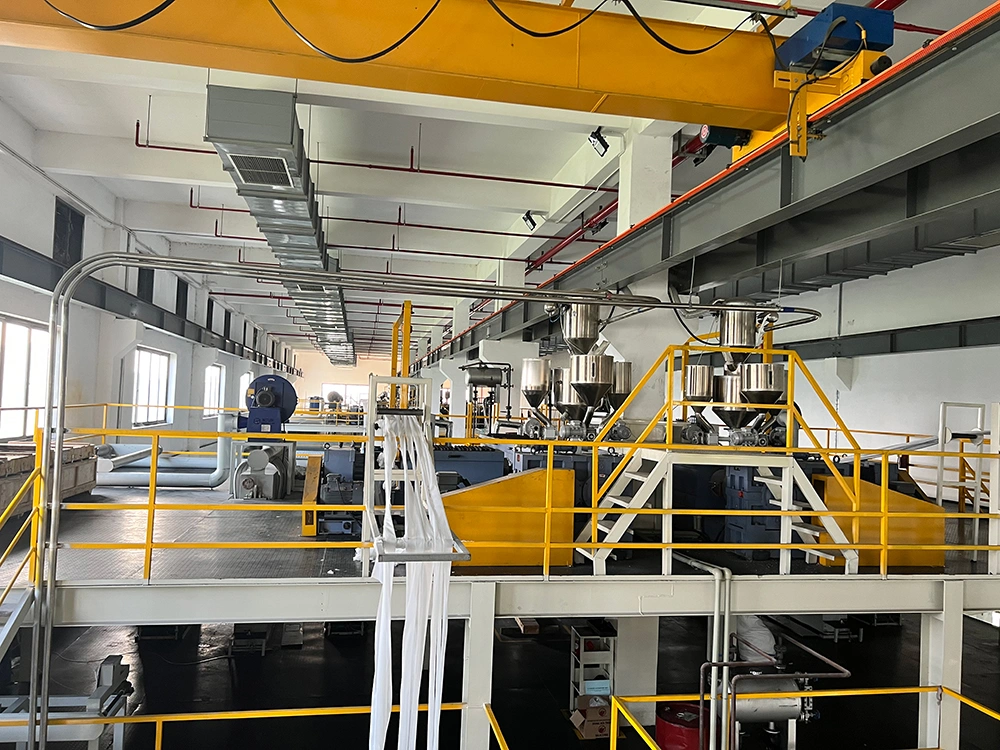
Extruder 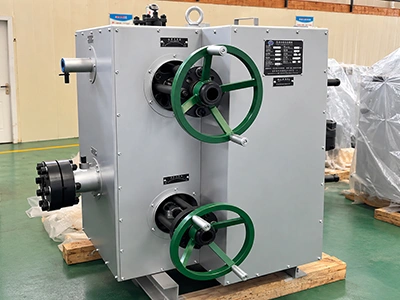
Melt Filter 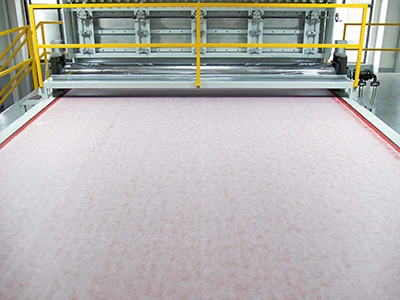
Web Forming Unit 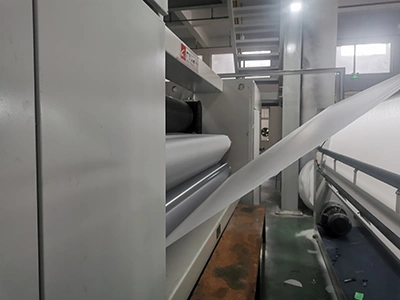
Thermal Bonding Calender 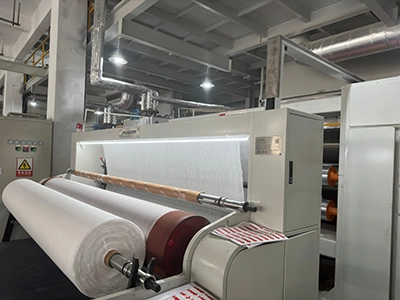
Nonwoven Master Roll Winder
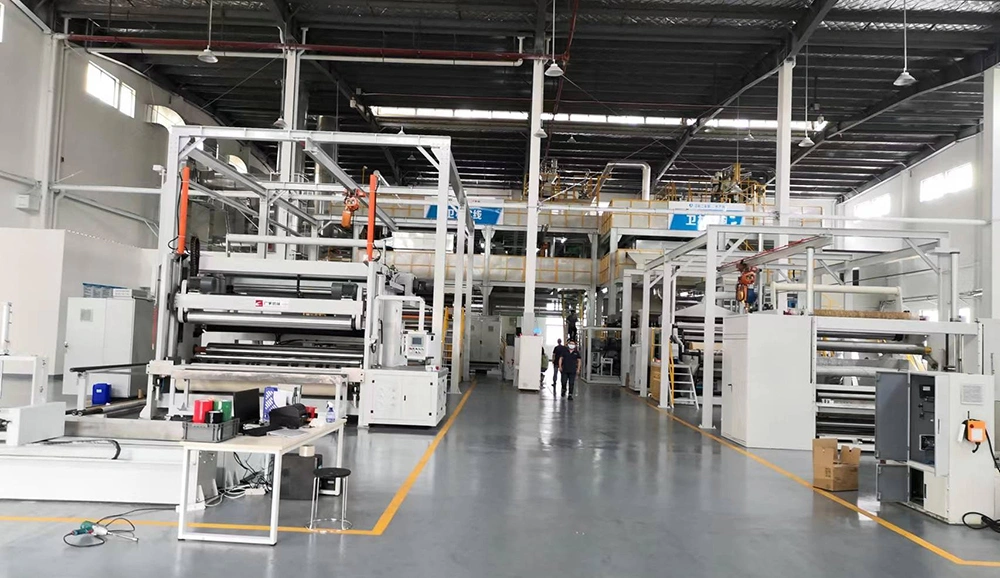
Delivered Projects
SS + SSS Spunbond Lines
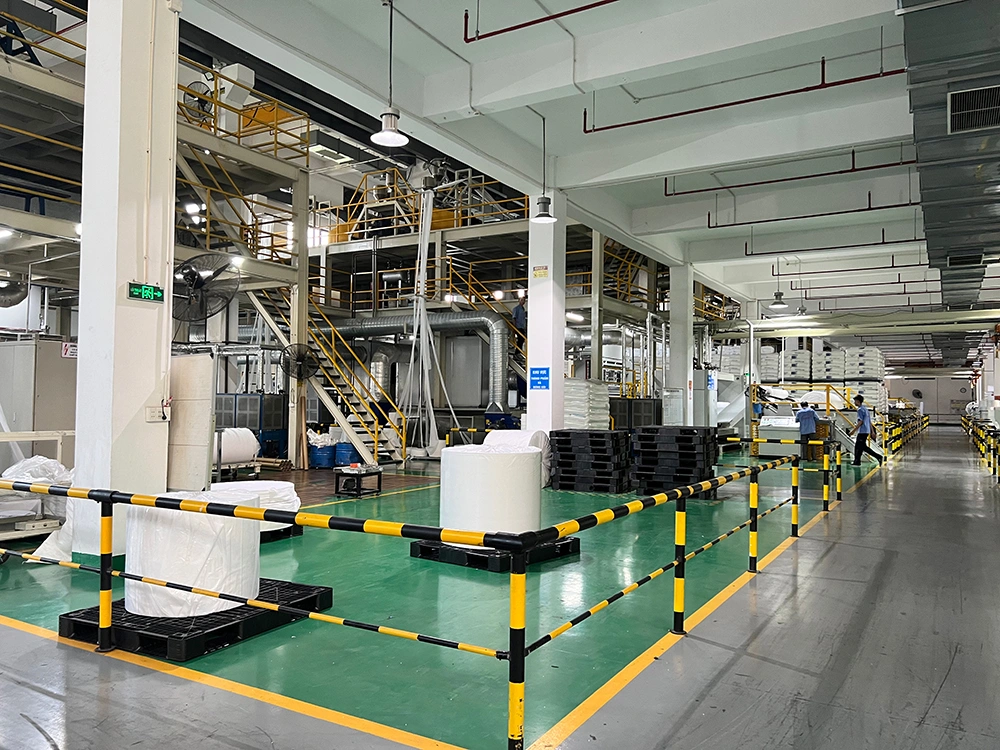
SS and SSS spunbond lines installed at a customer facility. This project view shows the equipment arrangement and production-floor layout.
YP Nonwoven Machinery specializes in development and manufacturing of complete nonwoven production lines. Founded in 2008 as Wenzhou Yanpeng Nonwoven Technology Company, we have continued to expand our engineering and production capabilities with a long-standing focus on spunbond technology and integrated solutions for nonwoven manufacturing to support customers from equipment configuration through line installation and start-up.
Explore Other Line Models