
- Mask Filtration Layers
- Filtration and barrier layers for protective clothing
Recommended lines: SMS / SSMS / SMMS / SSMMS
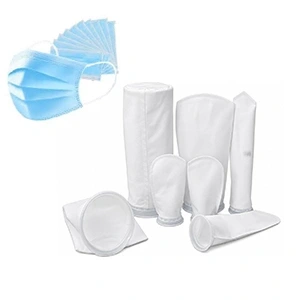
Filtration nonwovens must balance filtration efficiency, uniformity of pore size, air permeability, mechanical strength, resistance to pressure and barrier performance. The required fabric structure depends on whether the material acts as a support layer, a coarse filtration medium or a fine filtration layer.
Spunbond nonwovens provide mechanical strength and structural support. They are suitable for coarse liquid filtration, mask support layers, industrial filter bags and automotive filters.
Meltblown nonwovens are commonly used for fine filtration; their fine-fiber structure and small, relatively uniform pores suit air filtration and fine liquid filtration.
Manufacturers combine spunbond and meltblown layers in SMS, SMMS and similar spunmelt materials to achieve both structural support and precise filtration. Spunbond layers provide strength, while meltblown layers improve filtration, helping balance efficiency, permeability, pressure drop and mechanical strength in one material.
We offer spunbond, meltblown and spunmelt production lines for different filtration-material requirements. Spunbond lines focus on strength, permeability and dimensional stability, whereas meltblown production focuses on fine-fiber formation, pore structure and filtration performance. Spunmelt lines integrate both structures for filter materials that need strength and fine filtration within the same multilayer web.