YP-PET/RPET/PLA
PET, RPET and PLA Spunbond Lines
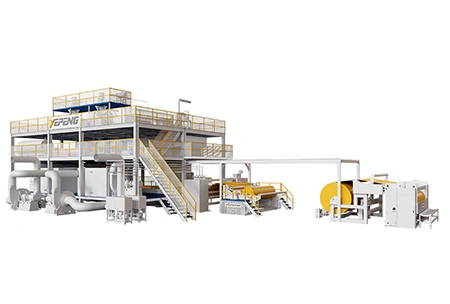
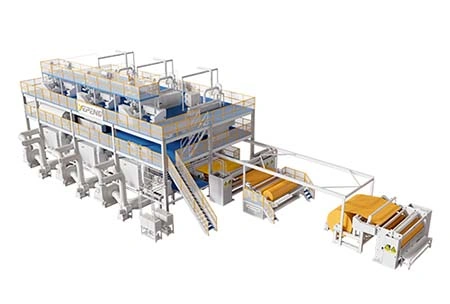
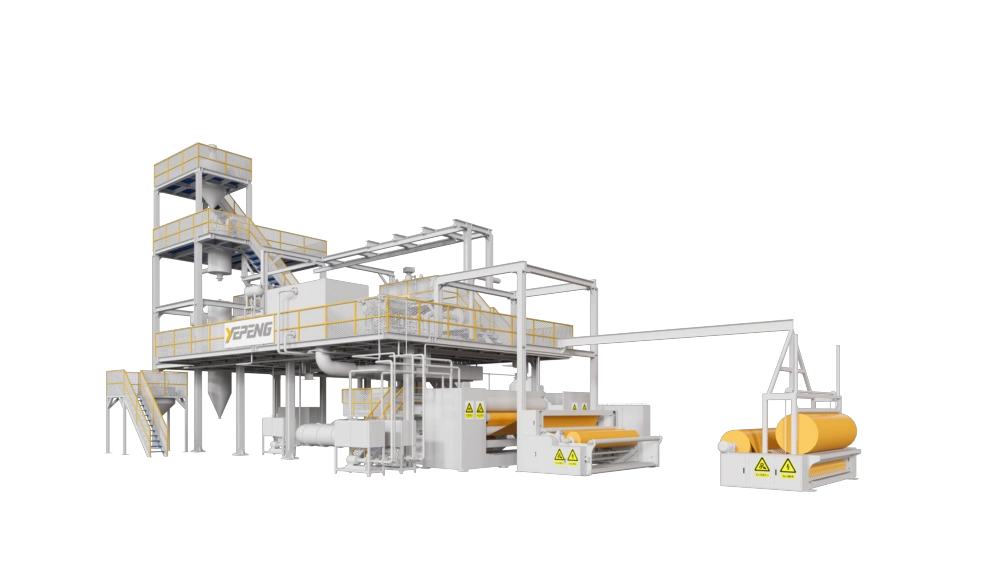
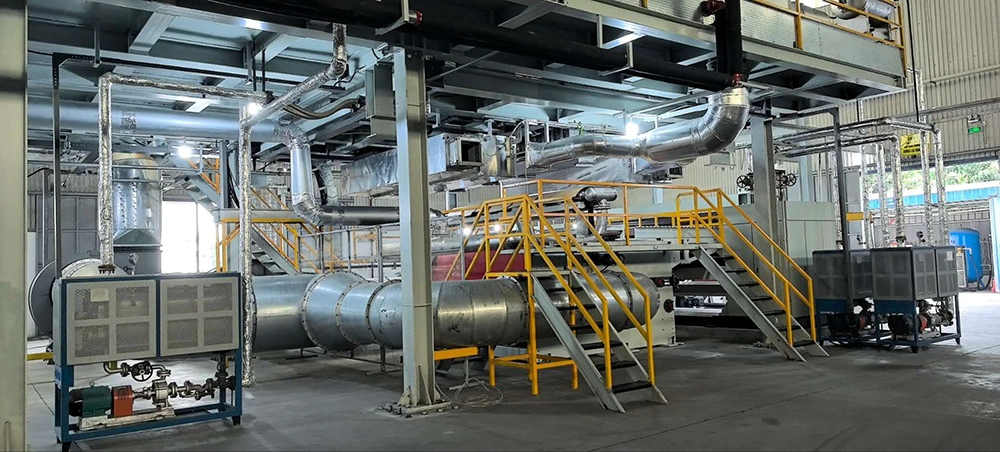
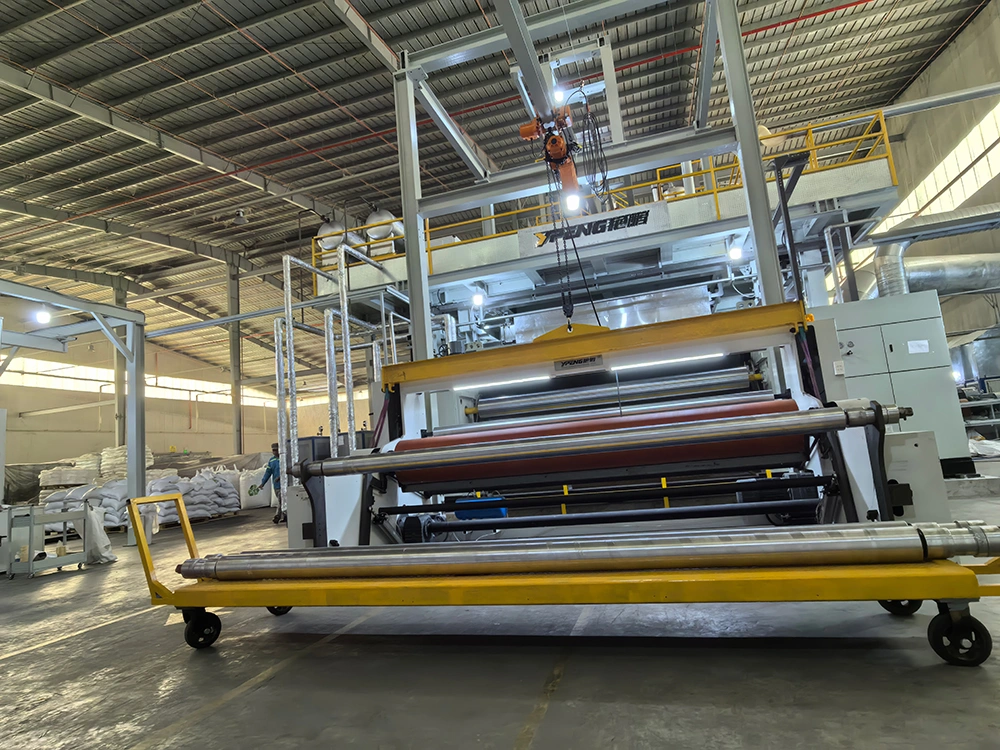
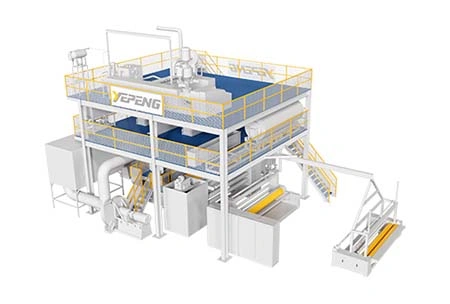
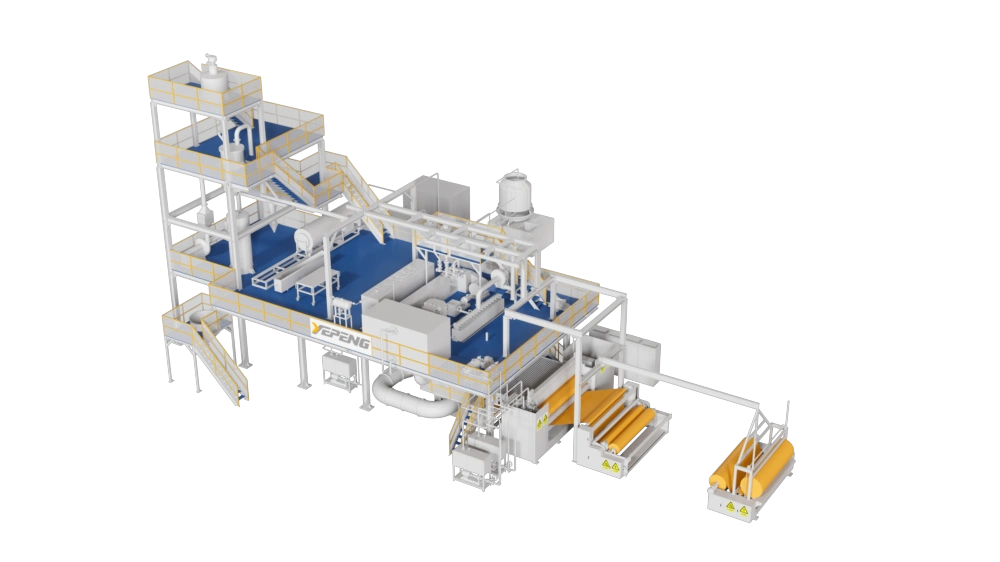
PET/RPET/PLA spunbond lines process pellets of polyester (PET), recycled polyester (RPET), or biodegradable polylactic acid (PLA) into nonwoven fabric. The pellets first undergo drying and dehumidification before the extruder melts them. The melt filter removes impurities, and the melt metering pump controls the flow to the spinnerets, which form continuous filaments. Once cooled and drawn, the filaments form a web on the web forming unit. The thermal bonding calender then bonds the fibers with heat and pressure, and the nonwovens master roll winder winds the fabric into rolls. The finished nonwoven fabric is suitable for packaging bags, industrial filters, and construction materials. Clients can use recycled polyester (RPET) as the raw material or choose PLA to produce biodegradable nonwoven fabric.
- Operators Required
- 4
- Fabric Width
- 1600 / 2400 / 3200 mm
- Fabric Weight
- 12–260 g/m²
- Production Speed
- 120 m/min
Features
- These nonwoven lines process PET, RPET, or PLA, so clients can use recycled polyester when their fabric requirements allow and reuse edge trim when the process conditions are suitable.
- Since PET, RPET, and PLA absorb moisture, the nonwoven line includes crystallization and dehumidifying drying to control moisture before extrusion. Moisture left in the polymer can cause it to break down during melt spinning, a reaction called hydrolysis that can weaken the filaments and cause them to break.
- The working width can be customized to meet each client’s fabric requirements, fit their factory layout, and accommodate future expansion.
- Operators can adjust the spinnerets and filament drawing settings to produce spunbond fabric weighing 20–260 g/m².
- The heat resistance, dimensional stability, and tear resistance of the fabric are determined by the raw materials and the way it is produced, particularly when it is used in things like packaging bags, furniture materials, and filter media.
Technical Specifications
| Model | |||
|---|---|---|---|
| Fabric Width | 1600 mm | 2400 mm | 3200 mm |
| Fabric Weight | 20–260 g/m² | 20–260 g/m² | 20–260 g/m² |
| Production Speed | 120 m/min | 120 m/min | 120 m/min |
| Annual Output (Based on 40 gsm fabric) | 1332–1665 t/year | 2331–2664 t/year | 2997–3330 t/year |
| Line Dimensions (L × W × H) | 36 × 14 × 15 m | 36 × 15 × 15 m | 36 × 16 × 15 m |
| Power Supply | 380 V / 50 Hz or customized | 380 V / 50 Hz or customized | 380 V / 50 Hz or customized |
| Operators Required | 4 | 4 | 4 |
| Shipping Containers | 8 × 40′ HC | 10 × 40′ HC | 13 × 40′ HC |
Note: The widths listed above are standard options. Other widths are available upon request.
Applications
PLA
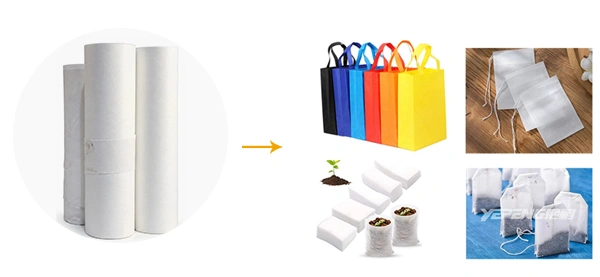
- Food and Beverage
Tea bags and coffee filter bags
- Packaging
Reusable shopping bags
- Agriculture and Horticulture
Crop covers, horticultural fabrics, weed-control fabrics, seedling-growing fabrics, and plant protection materials
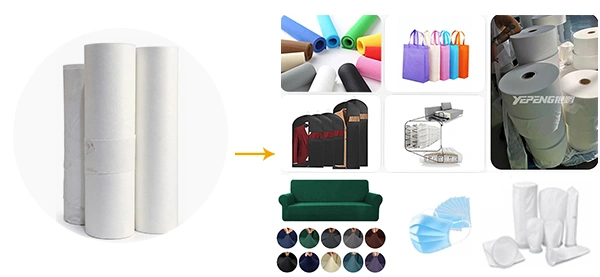
PET/RPET
- Automotive
Sound-absorbing materials, headliners, trunk linings, door-panel felt, wheel-arch liners, and automotive carpets
- Construction
Thermal insulation, sound insulation, roofing materials, and sound-absorbing materials for buildings
- Home Furnishings
Mattress felt, sofa filling materials, furniture padding, and carpet underlay
- Filtration
Filter media for air filtration, industrial processes, and automotive applications
- Civil Engineering
Geotextiles, drainage materials, and separation layers for roads and other engineering projects
- Packaging and Industrial Protection
Recycled polyester packaging materials, industrial felt, protective padding, and reinforcement materials for composites
Production ProcessDownload Process Flow
- Chips
- Wet Chips Transport
- Crystallization and Drying
- Dry Chips Transport
- Extruder
- Filter
- Spinning Die
- Metering Pump
- Spinning Unit
- Side Cooling
- Stretching Unit
- Web Former
- Calender
- Winder
- Slitter
- Packing
YP Nonwoven Machinery specializes in development and manufacturing of complete nonwoven production lines. Founded in 2008 as Wenzhou Yanpeng Nonwoven Technology Company, we have continued to expand our engineering and production capabilities with a long-standing focus on spunbond technology and integrated solutions for nonwoven manufacturing to support customers from equipment configuration through line installation and start-up.
Explore Other Line Models